Home › Services › Roof Replacement
When the verdict is replace, it is usually a second or third roof on a house from the 1960s through 1990s. That is a different job from the brochure: the decking, the old overlay and fifty years of attic heat are the scope, and the shingle is the easy part.
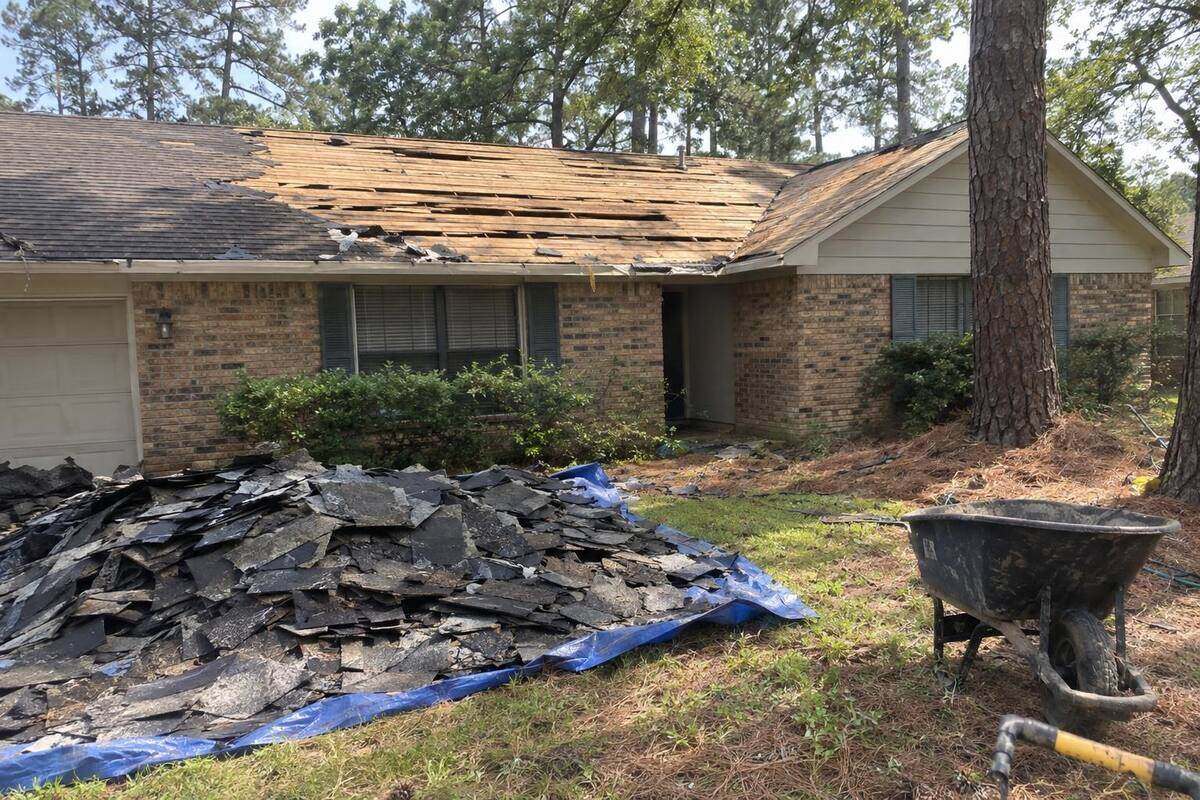
On a 1976 house in Champion Forest or a 1980s house off Louetta, pulling the shingles is where the real estimate begins. Plank decking with gaps, common before plywood, needs an overlay of sheathing before a modern shingle goes on. First-generation sheathing that has been through two roofs and fifty summers at 120°F may have delaminated in places, especially along valleys and eaves where water sat. A second roof laid as an overlay in the 1990s comes off with the first, which doubles the debris and exposes decking nobody has seen in thirty years. A written scope should say what is assumed about the decking, what a square of replacement decking costs if it is needed, and how the roofer will show you what they found.
Attics here run well past 120°F in summer, and the roofs that failed early on 1980s houses often failed from underneath: shingles cooked from below because the attic could not breathe. A replacement is the one time the roofer can add a ridge vent, clear or add soffit intake and remove the old turbines that leaked at their bases. Under a canopy, ridge vents also need a filter that keeps needles out. This is not an upsell; it is the part of a replacement that decides whether the third roof lasts longer than the second.
A laminated architectural shingle with a wind rating appropriate to a market that saw 58 mph in Beryl and near-100 mph gusts in the derecho is the normal choice; the shingle page covers the reading of those ratings. The rest of the scope matters as much: ice-and-water membrane in every valley because of the needle dams, new metal in the valleys, new boots on every pipe, flashing cut into the chimney brick rather than caulked, drip edge, and starter strip at the rakes where wind lifts tabs. A quote that names only the shingle is not a scope.
One to two days for a typical two-story once materials are on site, longer if decking has to be replaced or an overlay comes off with the first layer.
Yes, where limbs overhang the roof. It gives the crew room and it means the new roof starts life without a limb resting on it. That is an arborist’s job, scheduled before the roofer.
In most Spring associations a like-for-like shingle in an approved color does not need a fresh review, but a color or material change does. Champion Forest and Memorial Northwest both publish guidelines. Read yours before signing.
Then ask for the scope in writing: decking, ventilation, valleys, flashing, and what happens if the tear-off finds a surprise.
Call (832) 447-6614 Ask for a Verdict Spring Roofing