Home › Services › Shingle Roofing
Almost every roof in Spring and Klein is asphalt shingle, and the choice among shingles is smaller than the brochures suggest. What matters under a fifty-year-old canopy is different from what matters on an open lot, and it is worth ten minutes before signing.
The first roofs on 1970s and 1980s houses here were three-tab shingles: one layer, flat, light. Most second roofs were too. A laminated architectural shingle is two layers bonded together, heavier, thicker, with a higher wind rating and a longer published life. Under a canopy that drops limbs, the extra thickness is the difference between a bruise and a puncture. The cost difference per square is real but small next to the labor and the decking, which is why nearly every replacement in this market is laminated now.
The dark streaks on a north slope under trees are algae, and the green cushions are moss. Shingles with copper- or zinc-bearing granules resist the algae for a good part of their life. They do not stop moss on a slope that never dries, so the trimming schedule still matters, but on a Spring Creek Oaks or Northampton roof with a heavily shaded side they are worth specifying by name. Ask what the quoted shingle’s algae resistance is and how long it is warranted for.
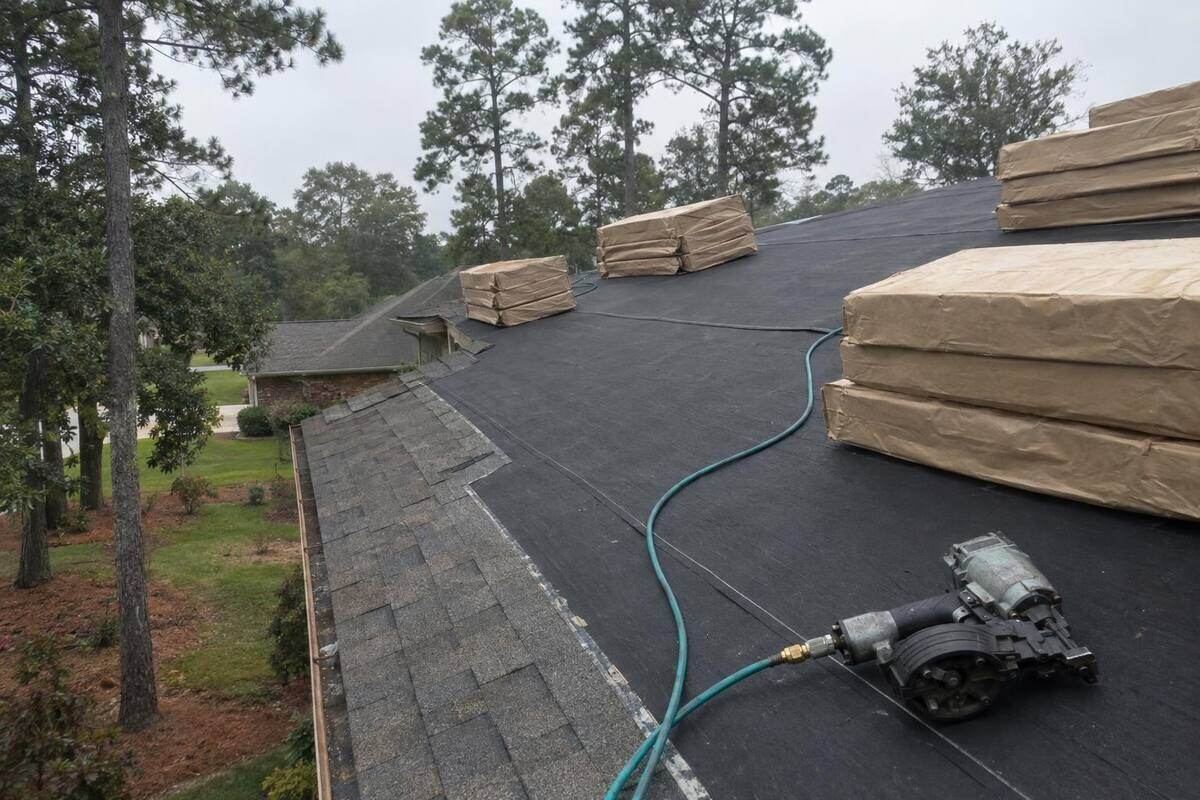
Shingles carry a wind rating that assumes they were installed as the manufacturer specifies: the right number of nails in the right line, starter strip at the eaves and rakes, and time in warm weather for the seal strips to bond. Beryl’s 58 mph is well inside most ratings; the derecho’s near-100 mph gusts elsewhere in the metro are at the top of them. A roof loses tabs at 60 mph when the nails were high or the rakes had no starter. The rating describes the shingle; the installation decides whether the roof gets it. Ask for the nailing pattern and the starter strip in writing.
Usually. Laminated shingles take a limb bruise better than three-tab, and the price difference is small next to the labor.
No. They resist the black algae streaks. Moss on a slope that never dries needs the shade reduced and the roof kept clear.
Manufacturing defects, prorated over time, and often only with the maker’s full system installed. It does not cover installation, limb strikes or a roof that cooked from an unventilated attic. The workmanship term from the contractor is the warranty that matters day to day.
Ask which one, why, and how it will be nailed. A local roofer answers all three.
Call (832) 447-6614 Ask for a Verdict Spring Roofing