Home › Services › Fiber-Cement and James Hardie Siding
Fiber-cement is the material most hardboard in Spring gets replaced with, and James Hardie is the brand name people use for it the way they say Kleenex. The product is good. The installation under a canopy is what decides whether it lasts thirty years or fifteen.
Fiber-cement is cement, sand and cellulose fiber pressed into planks, panels or shingles. It does not rot the way hardboard does, it does not burn, and termites do not eat it. It is not indestructible: it absorbs water at cut edges that were not primed, it cracks if nailed too hard or too close to an end, and it stains and grows algae on a shaded wall like anything else. “Hardie” in a quote may mean the James Hardie product line or any fiber-cement; ask which product, which thickness and which finish is being priced.
Clearance at the bottom: the first course sits above the brick ledge and well above soil and mulch, because a wall under pines is a damp wall. Flashing at every window and at the line where a roof slope meets the wall, with a kickout at the bottom of that line so water goes into the gutter and not behind the siding. Butt joints over studs, with the joint flashed or caulked according to the maker’s current instructions rather than the crew’s habit. Cut edges primed. Nails at the right depth, not driven through the face. And trees trimmed back from the wall, because the shade that rotted the hardboard is still there.
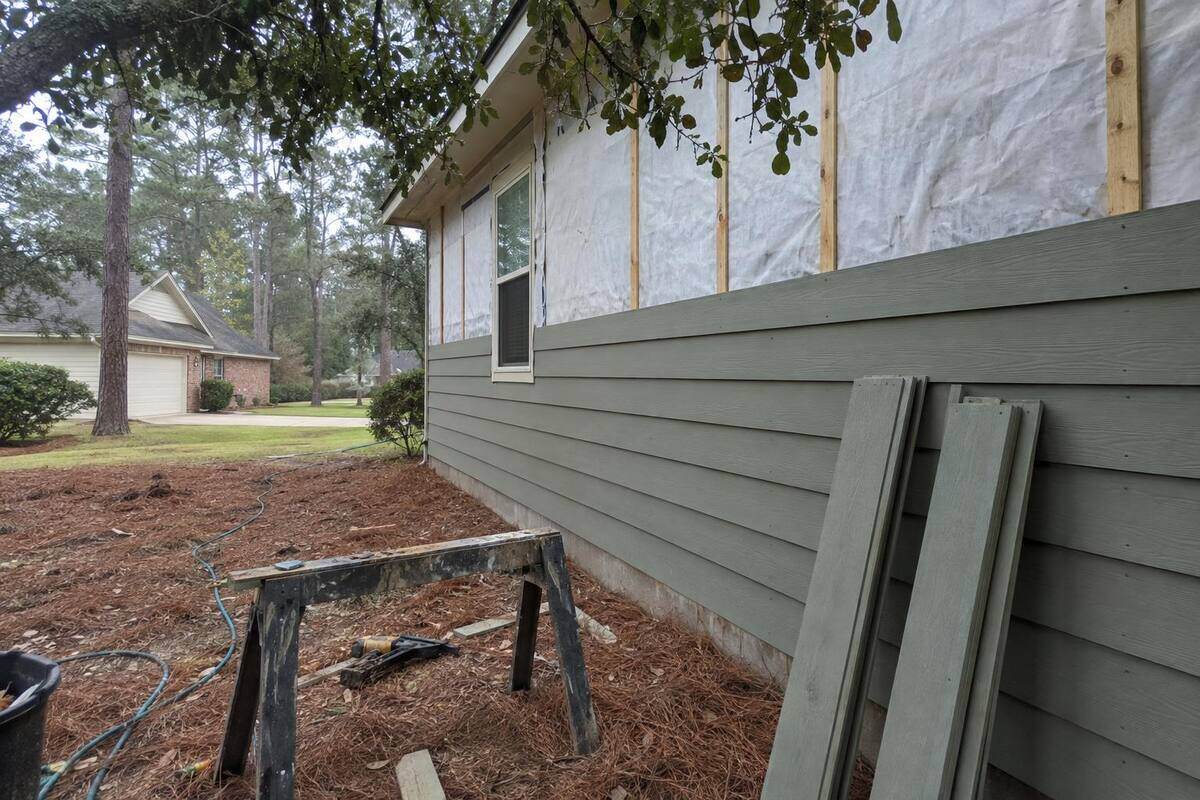
Fiber-cement comes primed for site painting or with a factory finish. Site paint gives more color choice and is what most Spring associations are used to reviewing; a factory finish carries a longer finish warranty. Either way the color and the material go to the architectural committee first in most communities here. The contractor’s submission should include the product literature and the color sample, and the work waits for the letter.
No, but it is the usual one here. Engineered wood and vinyl exist; under a canopy, fiber-cement’s resistance to rot is the property that matters most.
Manufacturers warrant the product for decades. Installed with the clearances and flashing right, it outlasts the roof. Installed badly, the edges swell and it fails like hardboard did.
Only if every elevation is failing. A brick front and a sound side wall stay. Each wall gets its own verdict.
Ask which product and how it will be flashed. A local contractor answers in writing.
Call (832) 447-6614 Ask for a Verdict Spring Roofing